
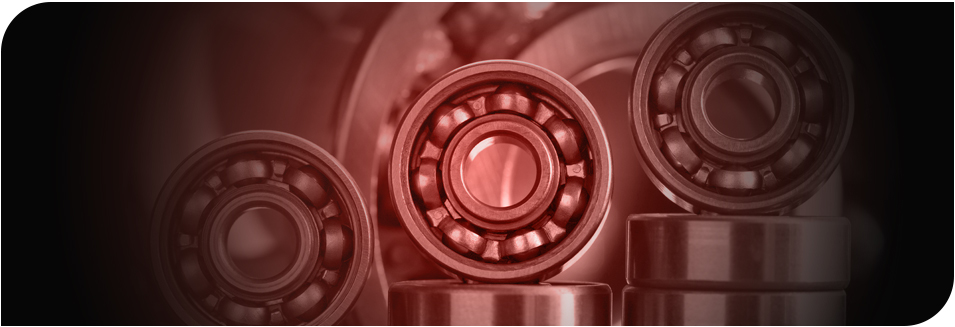
Bearing Manufacturing
The bearing is one of the most critical components for controlling motion and reducing friction in modern industry. Bearing manufacturing is a process that combines engineering and materials knowledge and requires high precision and durability. Used in many fields from automotive to heavy industry and from medicine to energy, bearings directly affect machine performance. That is why high-quality, correctly designed bearing production is of great importance for both manufacturers and users.
Types of Bearings
Bearings vary according to their application and load capacity. Each bearing type offers specific advantages, and the right choice extends system life.
- Ball Bearings: The most common type. Provides low friction and is suitable for high speeds.
- Roller Bearings: Preferred for heavy loads. Available in cylindrical, tapered and needle types.
- Thrust Bearings: Carry loads acting along the shaft axis.
- Self-Aligning Bearings: Tolerate angular misalignment between the shaft and the housing.
- Thin Section Bearings: Deliver high performance in confined spaces.
The right bearing choice can ensure the energy efficiency and long service life of your machine. Which bearing type do you think suits your machines best?
How Are Bearings Manufactured
Bearing production is a process that requires precision engineering and advanced technology. It generally goes through the following stages:
- Material Selection: High-carbon steel or stainless steel is generally used.
- Heat Treatment: Durability is increased and metal hardness is optimized.
- Machining: Raceways and surfaces are prepared to precise dimensions on CNC machines.
- Grinding: Surface roughness is reduced and friction is minimized.
- Assembly: Balls, cage and rings are assembled.
- Quality Control: Compliance is ensured through dimensional, hardness and surface tests.
Since micron-level precision is required at every stage, even the smallest error can shorten bearing life.
Custom Bearing Manufacturing
Although standard bearings meet many needs, some industries require custom designs. Custom bearings are produced especially for the defense, medical technology and aviation industries. As a gear and bearing manufacturer, Nursan Makina & Dişli offers fast solutions to customers in custom bearing manufacturing.
The criteria considered in custom bearing production are:
- Material selection suited to load capacity
- Corrosion-resistant surface coatings
- Designs resistant to high temperatures or vacuum
- Special ball and cage structures for low noise levels
Such products are usually designed to customer requirements using CAD/CAM software, and serial production begins after the prototype stage.
Bearing Manufacturer in İkitelli, Istanbul
İkitelli Organized Industrial Zone in Istanbul is one of Türkiye's busiest and most strategic centers for bearing manufacturing. Our company, operating in this region, not only produces standard bearings but also meets industrial needs with custom-designed bearing solutions.
Our company achieves precise and efficient production with high-tech CNC machines. Every product is assured through quality control processes compliant with ISO and DIN standards.
With a wide product range serving both domestic industry and international markets, we become our customers' solution partner. Our production capacity in İkitelli not only offers fast delivery but also makes a difference with our customer-focused, flexible and custom solution approach.
Frequently Asked Questions
What should I consider when choosing a bearing?
Load capacity, speed, operating environment (dust, humidity, temperature) and maintenance conditions are the most important criteria in bearing selection.
What should be considered when mounting a bearing?
Suitable pressing methods should be used, the bearing must not be struck and mounting should be done in a clean environment. Proper lubrication is also important.
What are the differences between sealed and open bearings?
Sealed bearings are better protected against dust and dirt and usually require no maintenance. Open bearings are suitable for higher speeds but require regular lubrication.
What are the advantages and disadvantages of thin section bearings?
Advantages include use in confined spaces, light weight and high speed capability. Disadvantages are limited resistance to heavy loads and higher cost.